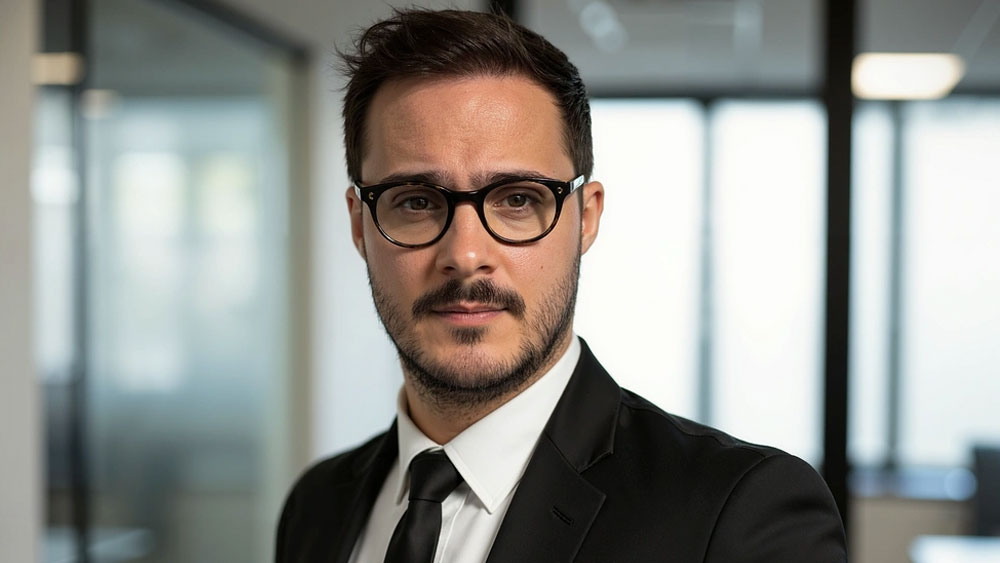
Global trading is often described in terms of speed, but for Sander Bake, it is only useful when supported by sound judgement and clear information.
Sander joined Global Investment Strategy in 2013 and serves as Director and Head of Global Trading in Hong Kong, leading Global Trade Execution for GIS UK and coordinating trading activity across London and Hong Kong.
His work covers equities, fixed income and derivatives, with clients ranging from high-net-worth individuals to asset managers, hedge funds, regional brokers and international banks.
We spoke to Sander about running a trading operation across time zones, the value of transparency, and why smaller firms can sometimes do what larger institutions cannot.
What first drew you to financial markets?
It began with a school presentation about the Euro, which sparked my interest in how currencies, government policy, and different economies connect. Economics classes gave that curiosity structure, and later studying Financial Economics in University showed me how theory applies to real decisions.
How would you describe your job to someone outside finance?
I lead a global team that acts as a buying and selling hub for clients. They may want to trade shares, bonds or derivatives, and our job is to handle that instruction properly in the relevant market.
That sounds simple until you consider the number of venues, counterparties, rules, currencies and time zones involved. My role is to make sure the team can move quickly while keeping risk management at the centre of the process.
What changes when a trading desk operates across London and Hong Kong?
The obvious advantage is continuity: markets do not all open and close at the same time, so combining the two offices gives clients coverage across a much longer trading day and allows activity to be handed over between regions.
However, 24/5 coverage is not just about keeping a screen switched on – the quality of the handover is critical. The next team needs to understand the order, what has happened, what remains open and whether market conditions have changed. Consistent standards are more important than where the person handling the order happens to be sitting.
Where does human judgement still matter, particularly when markets become unsettled?
Electronic access is extremely efficient for liquid, straightforward orders. It can reduce manual steps and give clients faster information, but not every trade is straightforward.
A less liquid security, a large order, or a fast-moving market may require judgement about timing, venue, and how an order is executed. That is where experienced people still add value. The technology should improve the information available to the trader; it should not encourage the idea that every decision can be automated.
Reliability and communication matter. A client needs to know the order is being handled, and what is happening around it. If liquidity changes or a trade cannot be completed in the expected way, you have to say so clearly.
For me, the most rewarding part of the job is helping a client through that uncertainty – whether it is a time-sensitive execution or a question about how a market is behaving – and seeing that work contribute to a successful outcome.
How do the client portal and Symphony change that relationship?
In simple terms, they make the process more transparent. Clients can view their accounts and activity through the portal, while Symphony provides us with a secure, direct channel for day-to-day communication.
We also use it to send intraday settlement reports, including trade status and cash positions. That matters because a client should not have to wait until the end of the day to discover what has happened. Better information makes it easier to oversee multiple products and markets through a single relationship.
You have described GIS as a “financial workshop”. What do you mean by that?
A large institution may have every tool, but those tools can be spread across separate departments, with rigid processes between them. I see GIS more as a well-equipped workshop: the products, systems and experienced people are brought together, and we can work out what is actually needed.
Clients are often surprised by the range that can be supported on one platform: equities, bonds, and derivatives can be integrated into systems and unified reporting. The point is not to make things more complicated but to reduce the operational friction that comes from dealing with several providers.
Does a smaller firm have an advantage over a large bank or broker?
It can. Large institutions have considerable resources, but clients may also encounter higher minimums or more layers of decision-making. Our scale allows experienced people to stay close to the client and respond more quickly.
That does not mean being loose about risk – risk management will always be a strong foundation. Agility is valuable because it lets you solve a problem or explore an appropriate structure without compromising the controls around it.
What should clients be thinking about as markets evolve?
Two developments stand out for me. Artificial intelligence is moving from theory into day-to-day trading operations, while geopolitics is changing supply chains and the way investors think about markets, counterparties and risk.
Both can create opportunities, but it’s important to realise that neither will move in a straight line. The mistake is to build everything around one confident prediction – a resilient strategy gives you room to respond when conditions change.
What misconception about trading would you most like to correct?
That success depends on finding the perfect entry point or predicting every short-term move. It does not.
Good trading starts with a clear purpose, disciplined risk management and the ability to adjust when the facts change. Speed is useful but consistency is more important.