
For much of modern economic history, governments have worried about whether their economies could create enough jobs. Across parts of Asia, that question is beginning to reverse.
Japan has been dealing with the consequences of an ageing population for years. South Korea faces exceptionally low birth rates, while China’s working-age population is shrinking. Although the scale and timing differ considerably between countries, the direction raises an important question for investors: what happens when labour itself becomes a scarcer economic resource?
The immediate assumption might be slower economic growth. Fewer workers can mean less productive capacity, a smaller tax base and greater pressure from ageing populations. Yet businesses do not simply accept labour shortages. They adapt, and those adaptations could have significant consequences for investment and the distribution of economic activity across Asia.
When workers become scarce, capital has to respond
A company struggling to recruit has several options. It can increase wages, automate the work, redesign how the job is performed, recruit workers from overseas or move some activities elsewhere.
Higher wages may support household incomes, but without corresponding productivity improvements they can also put pressure on corporate margins. That strengthens the incentive to invest in technology capable of allowing fewer people to produce more.
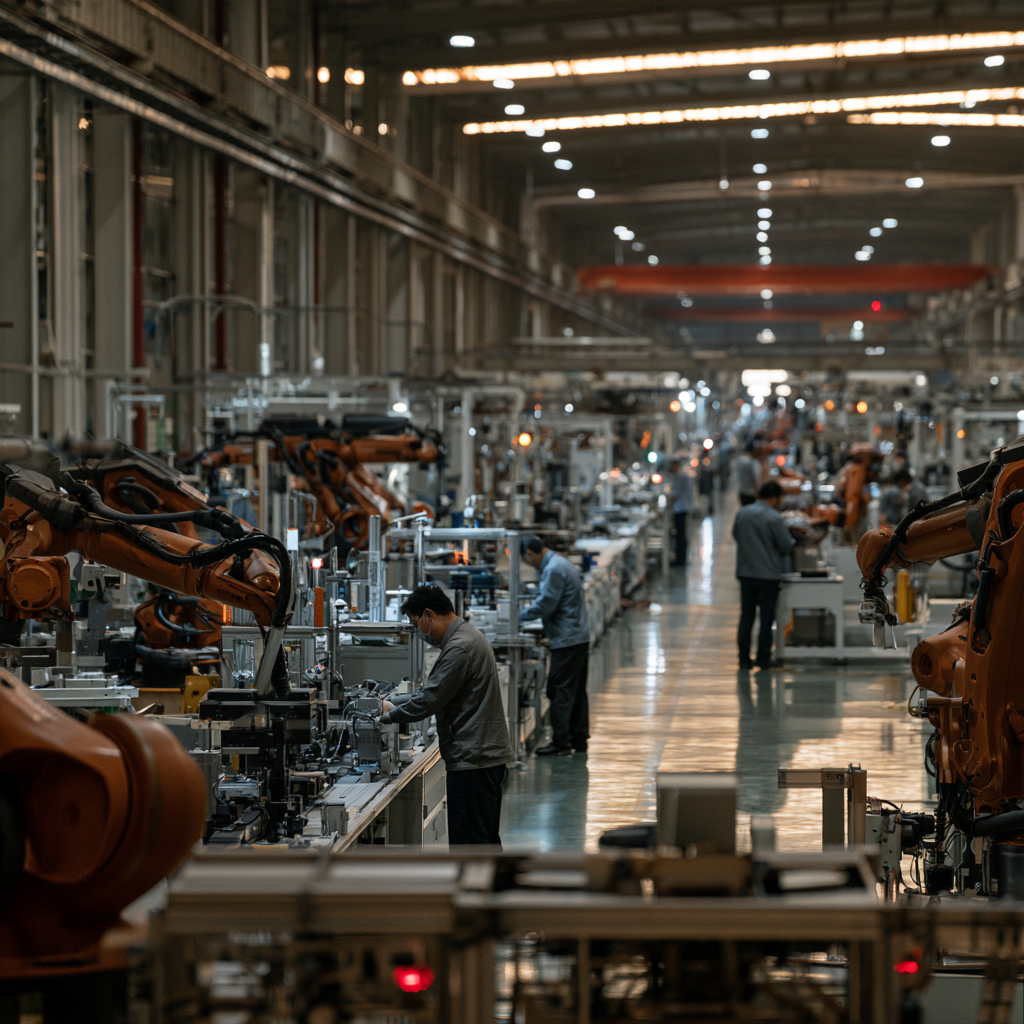
Manufacturing provides the obvious example: Japan, South Korea and China already have substantial automation capabilities, but persistent labour scarcity could make further investment in robotics increasingly economic. Artificial intelligence potentially extends the same principle into areas previously considered difficult to automate, including administrative, analytical and other service-based roles.
Demographic pressure could therefore become an important driver of capital expenditure. The countries facing the greatest labour constraints may also have the strongest incentive to become more productive.
Could services follow manufacturing across borders?
Automation will not be the answer everywhere.
For decades, companies have moved labour-intensive manufacturing to countries offering larger or lower-cost workforces. Demographic divergence could add another incentive for that process within Asia, as younger economies compete for activities that become harder or more expensive to perform in ageing ones.
But the next phase may extend further into services.
Technology has already made it possible to separate many jobs from the location of the customer or corporate headquarters. IT, administration, finance functions, customer support and increasingly sophisticated knowledge-based activities can potentially be performed across borders. AI and improved digital infrastructure could make geographically distributed operations easier still.
This creates an intriguing possibility. Ageing economies may increasingly retain high-value or highly automated activities at home while shifting some labour-intensive functions towards countries where workers remain more abundant.
Rather than simply reducing Asian growth, demographics could therefore change its geography.
A reallocation of labour, capital and opportunity
The effects would reach well beyond individual companies. Labour shortages could strengthen wage bargaining, alter immigration policies and change patterns of consumption as populations age. Governments may simultaneously face rising healthcare and pension costs supported by a proportionately smaller workforce.
For investors, however, one of the most important questions is how companies respond.
Two businesses exposed to the same demographic pressures could produce very different outcomes. One may experience rising labour costs and declining margins, while another may invest successfully in automation, improve productivity and emerge with a more efficient operating model.
There could also be consequences for younger Asian economies. Attracting manufacturing or service-sector activity can bring investment and employment, but the long-term benefits may depend on whether those economies can use incoming capital to develop skills, infrastructure and higher-value industries of their own.
Adaptation may matter more than demographics
Asia’s demographic transition should therefore not be viewed solely through the lens of population decline. It could become a catalyst for changes in technology, productivity, migration and the movement of business activity across borders.
The defining economic question may gradually shift from where can companies find the cheapest labour? To where can they find the right combination of people, technology and productivity?
A smaller workforce undoubtedly creates challenges, but it also creates powerful incentives to adapt. For investors looking across Asia, understanding how companies and economies respond to labour scarcity may ultimately prove more important than the demographic numbers themselves