

Author: Swati Kamble

  • How Financial Markets Are Dominating Commodity Prices: The Case of Oil

    In the world of commodities, we often expect prices to be driven by supply and demand. Yet, this isn’t the complete story for some of the world’s most essential resources. Financial markets, primarily through futures trading, exert significant influence over commodity prices. One prime example is oil, where the volume of futures contracts traded daily far exceeds the physical consumption of oil itself, transforming the way prices are set and influenced.
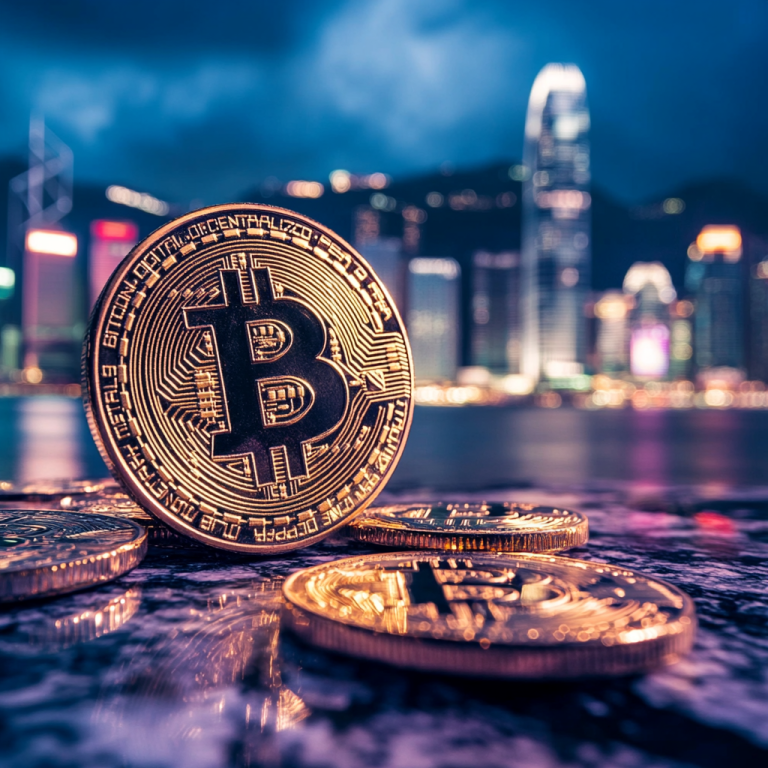

  • How Hong Kong’s support for bitcoin and crypto could benefit the region

    Hong Kong has increasingly positioned itself as a supportive environment for Bitcoin and cryptocurrencies in recent years, marking a significant shift in its regulatory stance. Historically known as a central global financial hub, Hong Kong’s embrace of crypto assets reflects its intent to remain competitive and innovative in the evolving financial landscape.

  • APAC’s role in shaping global investment trends

    Over the last few decades, the Asia-Pacific (APAC) region has undergone a profound transformation, shifting from a collection of emerging markets to critical players in the global investment landscape. Countries like China, India, and Singapore are now driving global financial trends, and investors worldwide are increasingly focusing on the region. As APAC economies grow, so does their influence on international capital flows, investment strategies, and market trends. This article explores how the region has evolved and its current role in shaping global investment.

  • Interesting facts about investment markets

    The Internet has undoubtedly enhanced investors’ knowledge, allowing them access to information that was previously the domain of wealth managers. However, there are a number of investment market anomalies that might surprise you. While you might smile at some of these facts and figures, a number have become what many would call “self-fulfilling prophecies.”

  • Sharia-compliant investment in Southeast Asia

    While many people associate Sharia with traditional Muslim laws, it is now a significant contributor to the world of finance. In Southeast Asia, countries such as Malaysia and Indonesia are central to Sharia-compliant investment strategies. However, this has now become something of a global phenomenon and one that institutional investors are acutely aware of.

  • Distressed Debt and Credit Market Arbitrage

    During the pandemic, there was uncertainty and confusion in equal measures. As we know, markets fear uncertainty the most; they can recalibrate and re-evaluate any bad news, but uncertainty tends to bring out the greatest fears of investors. This impacts not only equity prices but also corporate bonds and distressed debt, which can often be oversold and mispriced.

  • Risk Management in Large-Scale Trade Execution

    The topic of risk management in large-scale trade execution can be relatively complex, but it can be simplified with planning. Risk management plays a pivotal role in safeguarding portfolios from significant losses and aligning investments with your attitude to risk. Looking deeper at the issues, portfolio rebalancing is not just a one-off action but something to consider on an ongoing basis.

  • What is the Trump Bet?

    In recent weeks, you may have seen mention of the “Trump Bet”, which first emerged in 2016 in the run-up to the last US Presidential election. It revolves around market expectations in the event that former President Donald Trump was to be re-elected. Since Joe Biden’s withdrawal, appetite for the so-called “Trump Bet” has reduced, but it is still an interesting concept. So, how does it work?

  • Small-Cap vs. Large-Cap Strategies in APAC: Finding the Right Balance

    As the APAC economy continues to grow, accounting for approximately 39% of global GDP, there are emerging opportunities in both the small-cap and large-cap sectors. Finding the right balance for your portfolio, creating diversity while focusing on long-term capital growth, can be challenging. This article will look at the varying opportunities for investors looking to optimise their portfolios.